
Audio
Whistleblower Law & Healthcare Fraud
In Episode 6 of the Di Pietro Partners Podcast, Kevin Kohlert of Borealis Digital Marketing interviews David Di Pietro, Founding Partner and CEO of Di Pietro Partners, about healthcare fraud and whistleblower (qui tam) lawsuits. The discussion covers how fraud against the government occurs, who can report it, how whistleblowers are protected, and why these cases play a critical role in safeguarding Medicare, Medicaid, and other federal healthcare programs
What Is Healthcare Fraud?
Healthcare fraud occurs when false or illegal claims are submitted to the government for payment. These false claims typically involve Medicare, Medicaid, or Tricare fraud and can include billing for services not provided, improper diagnoses, or illegal billing practices.
These cases are prosecuted under the False Claims Act, a law dating back to the Civil War that allows private individuals to file lawsuits on behalf of the United States when government funds are defrauded
The Rise of Telehealth Fraud
Telehealth expanded rapidly during COVID-19 as federal programs relaxed in-person requirements. While this increased access to care, it also opened the door to widespread abuse. Common telehealth-related fraud issues include:
- Billing for services that are not appropriate for telehealth
- Using non-physicians while billing as if physicians performed the services
- Providing care across state lines without proper licensure
- Improper supervision and compliance failures
According to Di Pietro, telehealth fraud has become one of the fastest-growing enforcement areas for the Department of Justice.
Real-World Example: Medicare Part C Fraud
One major enforcement target discussed in the episode is Medicare Part C (Medicare Advantage). Under this system, private insurance companies receive monthly capitation payments based on patient risk levels.
Fraud occurs when providers or insurers exaggerate diagnoses or “search” for conditions to inflate risk scores without providing legitimate treatment. These inflated diagnoses result in higher government payments and can form the basis of large False Claims Act cases
Who Can Report Healthcare Fraud?
Whistleblowers are often insiders with access to billing or compliance information. Common whistleblowers include:
- CFOs and finance executives
- Nurses and clinical staff
- Billing and coding personnel
- Office managers and compliance officers
- Physicians and pharmacists
- Third-party vendors
The primary group excluded from whistleblowing against an organization is the organization’s own attorneys, due to attorney-client privilege
How to Report Healthcare Fraud Safely
Potential whistleblowers should carefully gather evidence without creating a digital trail. This includes collecting records discreetly, avoiding emails to personal accounts, and organizing documentation before contacting an experienced whistleblower attorney.
HIPAA does not prevent disclosure of records to the federal government when Medicare fraud is involved. Once a qui tam lawsuit is filed under seal, the evidence is shared with the Department of Justice or state authorities
Whistleblower Protections Against Retaliation
Both federal and state laws provide strong anti-retaliation protections. Whistleblowers cannot legally be fired or punished for reporting fraud to the government. If retaliation occurs, whistleblowers may be entitled to reinstatement, back pay, and additional damages. While many whistleblowers eventually leave their jobs, the law is designed to protect them throughout the process
Why Whistleblowers Matter
Medicare operates largely on an honor system, paying claims without the type of pre-payment audits used by private insurers. This system ensures broad access to care for seniors but depends heavily on whistleblowers to expose abuse. When fraud is proven, the government can recover triple damages and impose penalties of nearly $30,000 per false claim, making enforcement both aggressive and financially significant
Financial Incentives for Whistleblowers
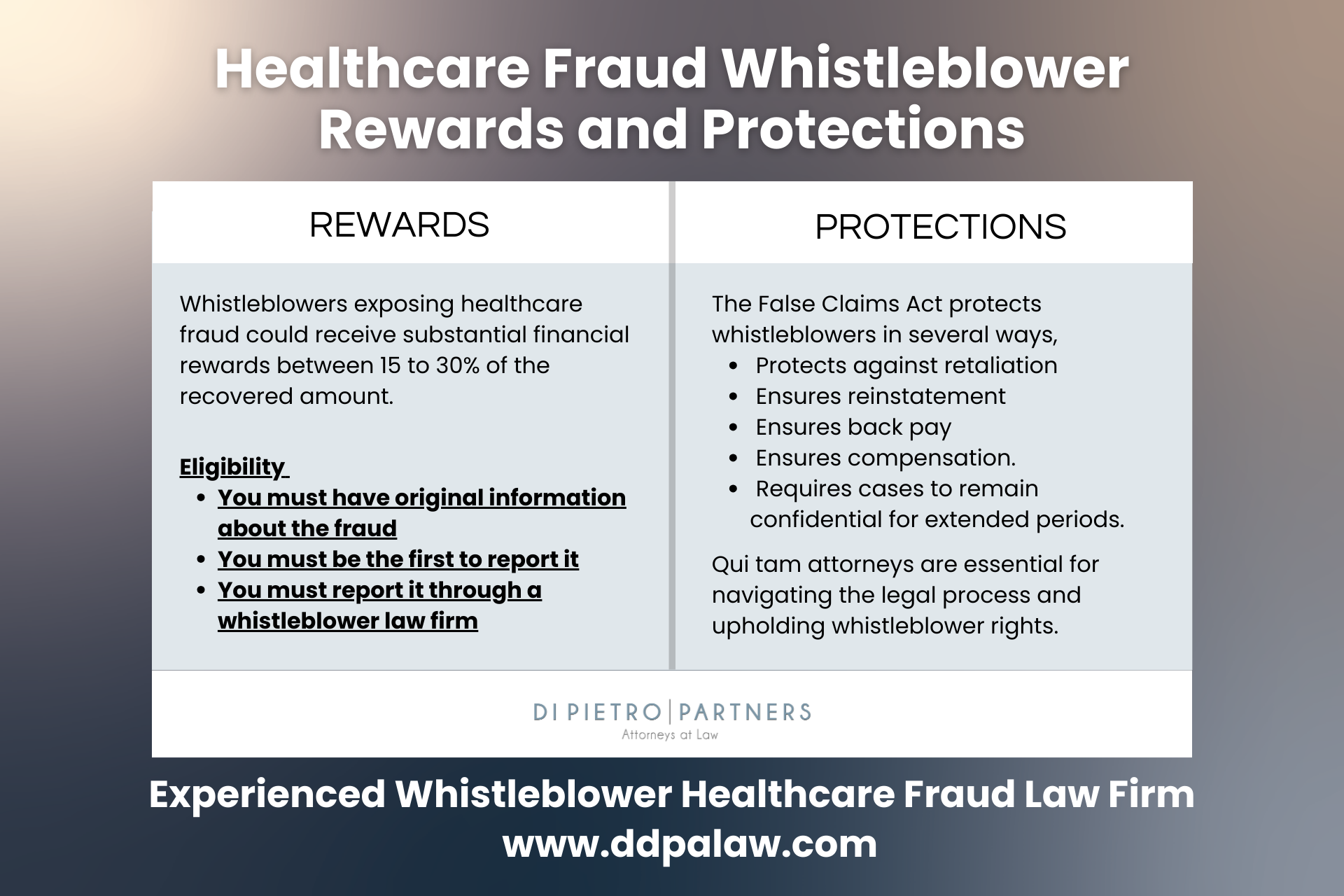
Successful whistleblowers are typically awarded 15-30% of the government’s recovery, depending on whether the government intervenes. These recoveries can reach hundreds of millions of dollars, especially when cases involve large hospital systems, insurance companies, or nationwide healthcare providers. Even seemingly small violations can uncover widespread corporate fraud
How Di Pietro Partners Helps Whistleblowers
Di Pietro Partners has extensive experience handling healthcare fraud and False Claims Act cases nationwide. The firm prepares whistleblowers for Department of Justice interviews, files sealed qui tam lawsuits, and works closely with federal and state prosecutors. Their goal is to position cases for government intervention and maximize both accountability and whistleblower recovery.