Misdiagnosis Attorney

Florida Malpractice Attorneys For Misdiagnosis
Misdiagnosis is one of the more common reasons for malpractice lawsuits. Simply put, these lawsuits involve incorrect diagnosis or late diagnosis by a medical professional that causes or contributes to serious patient injury, illness, or death. As patients, we trust the opinions of physicians and medical personnel; thus, it’s both shocking and devastating if our condition is mishandled, especially, when an earlier or correct diagnosis could have affected the outcome.
If you or a loved one suffered injury due to a wrong diagnosis by medical professionals in Florida, it’s important to have your case reviewed as soon as possible because Florida medical malpractice claims are subject to strict filing deadlines. The medical malpractice attorneys at our firm work with a board-certified physician and have the experience needed to evaluate and pursue these cases.
Di Pietro Partners handles qualifying medical malpractice cases on a contingency-fee basis. Contact our office for a free, confidential case evaluation.
Key Takeaways
- A misdiagnosis, delayed diagnosis, or failure to diagnose does not automatically constitute medical malpractice; the patient generally must show a breach of the applicable standard of care and resulting harm.
- Diagnostic errors may involve conditions such as stroke, heart attack, and cancer, as well as problems involving lab results, medical records, medications, imaging, or follow-up care.
- Misdiagnosis claims often require review of medical records, diagnostic testing, treatment decisions, and expert medical evidence to determine whether an earlier or correct diagnosis could have changed the outcome.
- Florida medical malpractice claims are subject to strict filing deadlines and presuit requirements, making prompt evaluation important when a diagnostic error is suspected.
Misdiagnosis Statute of Limitations
Florida medical malpractice claims are subject to specific legal requirements and filing deadlines. A patient bringing a malpractice claim generally must prove that a healthcare provider breached the prevailing professional standard of care and that the breach caused or contributed to the patient’s injury. Florida also requires a presuit investigation supported by a verified written opinion from a qualified medical expert before a medical negligence lawsuit is filed.
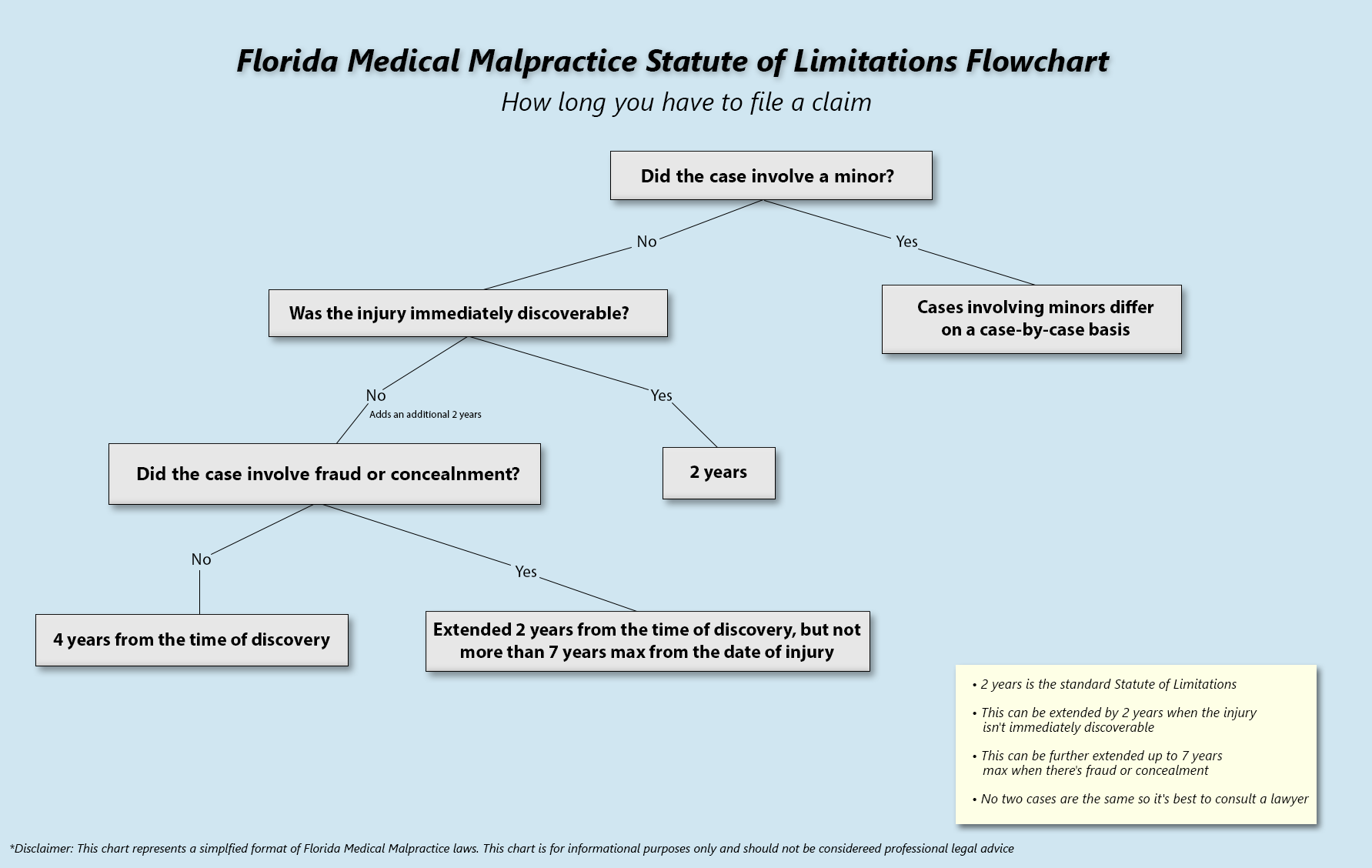
Under Florida law, a medical malpractice action generally must be commenced within two years from the incident or from when the incident was discovered, or reasonably should have been discovered with due diligence. In most cases, a four-year statute of repose also limits how long after the underlying incident a claim may be brought.
Limited exceptions can apply. For example, Florida law contains special provisions for certain claims involving minors. When fraud, concealment, or intentional misrepresentation prevented discovery of the injury, the deadline may also be extended, subject generally to a seven-year outside limit from the incident.
Because determining when a medical malpractice deadline begins or expires can depend on the specific facts of the case, it is important to have a potential misdiagnosis claim reviewed as soon as possible.
Do You Have a Case?
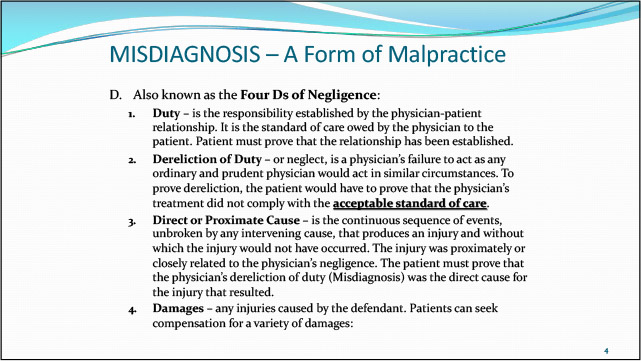
It’s important to note that an incorrect or delayed diagnosis does not automatically constitute medical malpractice. Medical professionals sometimes reach incorrect conclusions even when appropriate care was provided. Under Florida law, a patient generally must show that the healthcare provider breached the prevailing professional standard of care and that the breach caused the patient’s injury.
To determine whether a misdiagnosis may support a medical malpractice claim, several elements generally must be present:
- A healthcare provider-patient relationship existed.
- The healthcare provider breached the applicable standard of care.
- The breach caused or contributed to an injury or worsened outcome.
Misdiagnosis, Delayed Diagnosis, and Failure to Diagnose
Diagnostic malpractice can occur in several different ways. A misdiagnosis occurs when a healthcare provider identifies the wrong condition. A delayed diagnosis occurs when the correct condition is eventually identified, but not as quickly as it reasonably should have been. A failure to diagnose occurs when a medical condition is missed altogether.
The distinction can be important because the central issue is not simply whether the initial diagnosis was wrong. A medical malpractice claim generally depends on whether the healthcare provider failed to meet the applicable standard of care and whether that failure caused additional harm, such as delayed treatment, progression of a disease, permanent injury, or a reduced chance of recovery.
EXAMPLES OF MISDIAGNOSIS/WRONG DIAGNOSIS
 Misdiagnosed stroke – This is one of the more common diagnostic errors by hospitals/medical staff. Strokes can often be mistaken for less serious health problems such as a migraine, particularly, in younger patients.
Misdiagnosed heart attack – Similar to a stroke, heart attacks are sometimes mistaken for a panic attack or another less serious health concern.
Errors with medical records – This can occur either when doctors/medical professionals do not properly obtain or interpret a patient’s medical history, or there’s a clerical error with the records.
Incorrect medication – There are various types of medication or prescription errors that can be made by doctors or hospitals. These errors may involve being provided with the incorrect medication due to misdiagnosis by a medical professional.
Issues with lab results – If lab results are misinterpreted, this can lead to improper diagnosis.
Incorrect cancer diagnosis – It’s not unheard of for patients to be incorrectly diagnosed with cancer. This includes the identification of cancer in the wrong parts of the body, or an incorrect diagnosis all together. When this occurs, the patient is often subjected to expensive and physically/emotionally draining treatments (such as chemotherapy) that put the patient at unnecessary risks.
Delayed cancer diagnosis – On the same topic, if cancer is mistaken for a different medical condition or the diagnosis is missed altogether, proper treatment could be delayed resulting in serious health issues or death.
How Is a Misdiagnosis Claim Evaluated?
Determining whether a diagnostic error amounts to medical malpractice usually requires a detailed review of the patient’s medical history and the care provided. Relevant evidence may include medical records, physician notes, laboratory results, diagnostic imaging, test results, referrals, and the timing of symptoms and treatment.
Medical experts may also review the case to determine whether a reasonably prudent healthcare provider would have recognized the condition sooner or taken different diagnostic steps under the circumstances. Just as importantly, the evidence must help establish whether an earlier or correct diagnosis would likely have changed the patient’s treatment or outcome.
Who May Be Responsible for a Misdiagnosis?
Depending on how the diagnostic error occurred, a misdiagnosis claim may involve one or more healthcare providers. Potentially responsible parties can include physicians, emergency-room providers, radiologists, pathologists, specialists, laboratories, and hospitals or other healthcare facilities.
Determining responsibility requires examining who evaluated the patient, what information was available at the time, what testing or referrals were ordered, and whether the healthcare provider responded appropriately to the patient’s symptoms and test results. In some cases, the diagnostic failure may involve multiple providers at different stages of the patient’s care.
Why Choose Di Pietro Partners for a Medical Malpractice Claim Involving Misdiagnosis?
Misdiagnosis cases can be medically and legally complex. Determining whether malpractice occurred may require a careful review of medical records, diagnostic testing, treatment decisions, and whether an earlier or correct diagnosis could have changed the patient’s outcome.
Di Pietro Partners approaches these cases with both legal and medical insight. Founder David Di Pietro has more than 20 years of litigation experience, including medical malpractice and healthcare-related matters, while Dr. Tiffany Di Pietro serves as the firm’s Medical Advisor and is a licensed Florida physician who is quadruple board-certified in Internal Medicine, Cardiology, Echocardiography, and Nuclear Cardiology.
This combination helps the firm evaluate complex diagnostic issues, understand the medical evidence, and determine whether a healthcare provider’s actions may have fallen below the applicable standard of care.
That reads more like a natural explanation of why the firm is suited to this specific type of case, instead of a generic law-firm sales section.
Speak With a Florida Misdiagnosis Attorney
Di Pietro Partners represents medical malpractice clients throughout Florida, including individuals harmed by misdiagnosis and delayed diagnosis. Our main office is located in Fort Lauderdale, with satellite offices in Miami, West Palm Beach, and other locations. We also represent out-of-state clients whose medical injury occurred in Florida.
Our medical malpractice attorneys work alongside a board-certified physician to evaluate complex medical issues and determine whether a diagnostic error may have fallen below the applicable standard of care. We handle qualifying medical malpractice cases on a contingency-fee basis, meaning you pay no attorney’s fees unless we recover compensation on your behalf.
If you believe a misdiagnosis or delayed diagnosis caused you or a loved one serious harm, contact Di Pietro Partners for a free consultation.