
Trust Litigation Guide (2026 Edition)
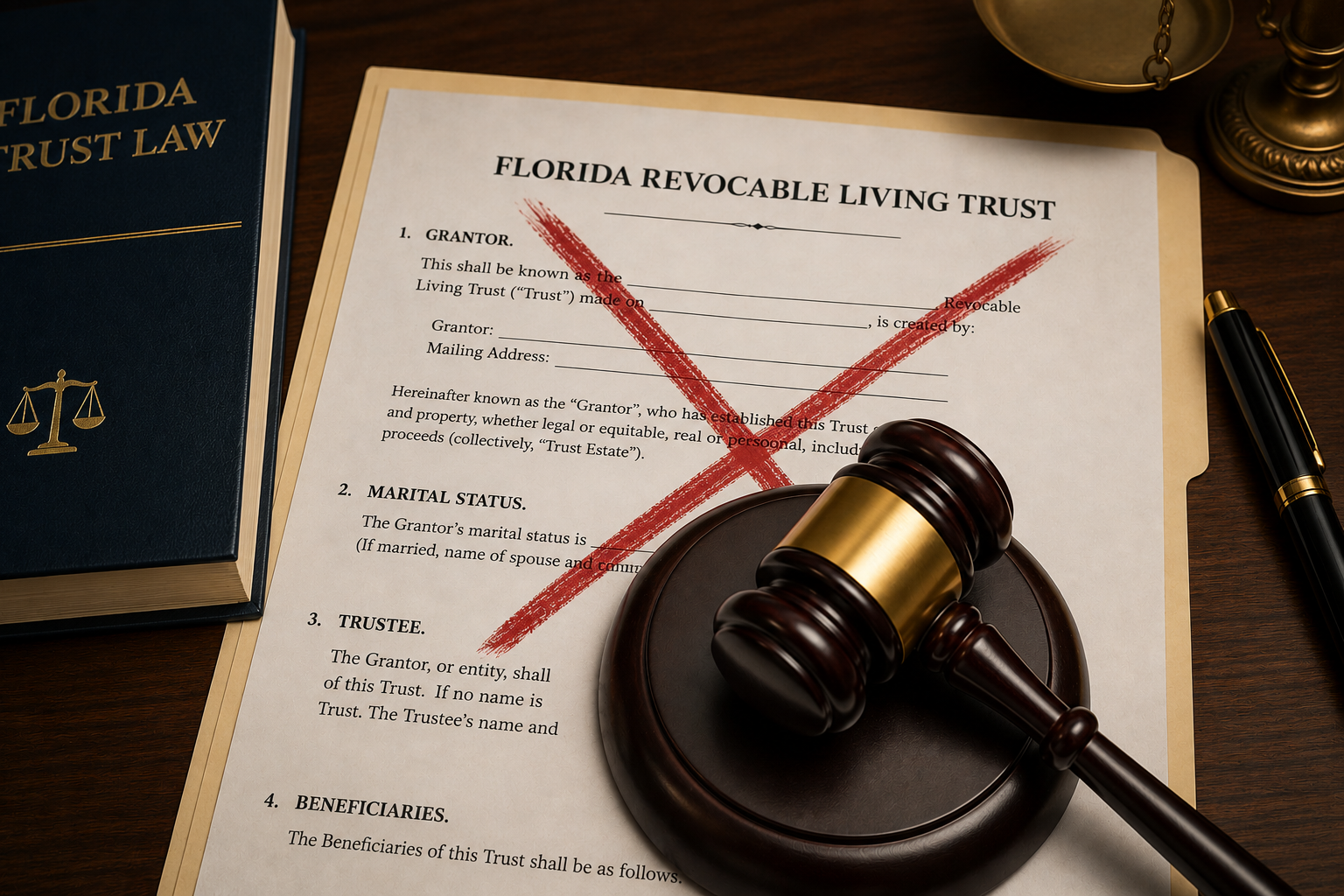
Trust disputes can occur for a variety of reasons. In many cases, conflicts arise when beneficiaries believe that a trustee has:
- Mismanaged trust assets
- Failed to provide required information
- Acted in their own interest rather than in the best interest of the beneficiaries.
Other disputes may involve allegations of:
- Undue influence
- Lack of capacity at the time the trust was created or amended
- Disagreements over how the terms of the trust should be interpreted.
Florida has a well-developed body of law governing trusts, primarily through the Florida Trust Code, which outlines the duties of trustees and the rights of beneficiaries. Trust litigation is typically handled in probate courts, which have jurisdiction over trust and estate matters. Because Florida is a popular state for retirees and estate planning, courts frequently handle complex trust disputes involving significant assets and multiple parties.
Legal action may become necessary when informal resolution efforts fail or when there is evidence of serious misconduct. In these situations, trust litigation provides a legal mechanism for beneficiaries or other interested parties to protect their rights, recover mismanaged assets, or seek the removal of a trustee.
-Table of Contents-
- Introduction
- What Is Trust Litigation?
- Common Causes of Trust Disputes
- Who Can File a Trust Lawsuit
- Trustee Duties Under Florida Law
- Removing or Replacing a Trustee
- Step-by-Step: How Trust Litigation Works
- Evidence in Trust Litigation Cases
- How Long Does Trust Litigation Take?
- Costs and Financial Considerations
- Risks and Considerations Before Filing
- Alternatives to Litigation
- Florida Laws Governing Trust Disputes
- Trust Litigation FAQ
- Attorney Review & Legal Oversight
What Is Trust Litigation?
Trust litigation refers to legal disputes involving the creation, administration, or enforcement of a trust. These disputes are typically resolved through the court system when parties cannot reach an agreement regarding how a trust should be managed or interpreted.
Trust litigation often arises when there are concerns about whether a trustee is properly fulfilling their legal obligations or when beneficiaries believe their rights under the trust are being violated. These cases can involve a wide range of issues, including allegations of misconduct, disagreements over trust terms, or challenges to the validity of the trust itself.
It is important to distinguish between trust administration and trust litigation.
Trust administration involves the routine management of a trust, including tasks such as distributing assets, maintaining records, communicating with beneficiaries, and ensuring compliance with the terms of the trust. In most cases, trust administration occurs without conflict.
Trust litigation, by contrast, occurs when disputes arise that require legal intervention. When disagreements cannot be resolved informally, parties may file claims in court to enforce their rights, challenge the actions of a trustee, or seek judicial guidance on how the trust should be administered.
Several parties are commonly involved in trust litigation matters, including:
- Trustees – Responsible for managing the trust and acting in the best interests of the beneficiaries
- Beneficiaries – Entitled to receive assets or benefits from the trust
- Co-trustees – Share responsibility for administering the trust and may have disputes with one another regarding decision-making
In some cases, additional parties such as successor trustees, heirs, or other interested individuals may also become involved, depending on the nature of the dispute.
Because trusts often involve significant financial assets and long-term planning, disputes can become complex and may require detailed legal and financial analysis. Trust litigation provides a formal legal process for resolving these disputes and ensuring that the terms of the trust are carried out in accordance with the law.
Common Causes of Trust Disputes
Trust disputes can arise for a variety of reasons, often involving disagreements over how a trust is managed, interpreted, or created. Because trusts frequently involve significant assets and multiple interested parties, even small disagreements can escalate into formal legal disputes.
Understanding the most common causes of trust litigation can help beneficiaries and trustees recognize when legal issues may be developing.
Breach of Fiduciary Duty
One of the most common causes of trust litigation involves allegations that a trustee has breached their fiduciary duty.
Trustees are legally required to act in the best interests of the beneficiaries and to manage trust assets responsibly. A breach of fiduciary duty may occur when a trustee:
- Mismanages or improperly invests trust assets
- Fails to act prudently in financial decisions
- Uses trust assets for personal benefit
- Fails to follow the terms of the trust
Because trustees are held to a high legal standard, even questionable decision-making can lead to disputes if beneficiaries believe their interests have been harmed.
Trustee Misconduct
Trustee misconduct can take many forms beyond financial mismanagement. In some cases, disputes arise when trustees fail to properly communicate with beneficiaries or do not provide required information about the trust.
Examples of misconduct may include:
- Failing to provide accountings or financial reports
- Withholding information from beneficiaries
- Favoring one beneficiary over another
- Delaying or refusing distributions without justification
Lack of transparency is a frequent source of conflict and can lead beneficiaries to seek court intervention.
Undue Influence
Undue influence occurs when an individual exerts improper pressure on the person creating or modifying a trust, often for personal gain.
These cases are common in situations involving:
- Elderly individuals
- Caregivers or close family members
- Last-minute changes to estate plans
If a trust or amendment was created under undue influence, it may be challenged and potentially invalidated through litigation.
Lack of Capacity
A trust may also be challenged if the individual who created or amended it lacked the mental capacity to understand their actions at the time.
Capacity-related disputes often involve:
- Dementia or cognitive decline
- Serious illness
- Medication effects
- Advanced age
Medical records, witness testimony, and expert opinions are often used to determine whether the individual had the legal capacity required to create or modify the trust.
Trust Interpretation Disputes
Not all trust litigation involves misconduct. In some cases, disputes arise simply because the language of the trust is unclear or open to multiple interpretations.
These disputes may involve:
- Ambiguous or conflicting provisions
- Unclear distribution instructions
- Disagreements over trustee authority
- Questions about beneficiary rights
When trust language is unclear, courts may be asked to interpret the document and determine how it should be applied.
Who Can File a Trust Lawsuit
Trust litigation is not limited to a single party. Several individuals or entities may have the legal right to file a lawsuit, depending on their relationship to the trust and the nature of the dispute.
In general, anyone with a direct interest in the trust or who is affected by how it is administered may have standing to bring a legal claim.
Common parties who may file a trust lawsuit include:
- Beneficiaries – Beneficiaries are the most common parties involved in trust litigation. They have a direct financial interest in the trust and may file a lawsuit if they believe the trustee has mismanaged assets, failed to make required distributions, or violated their fiduciary duties.
- Co-trustees – When more than one trustee is appointed, disputes may arise regarding how the trust should be managed. A co-trustee may file a legal action if they believe another trustee is acting improperly or not fulfilling their responsibilities.
- Successor trustees – A successor trustee, who is designated to take over management of the trust at a later time, may have standing to bring a claim if issues arise during the transition or if prior actions by a trustee need to be addressed.
- Interested parties – In some cases, other individuals with a legal or financial interest in the trust may also have the right to file a lawsuit. This can include heirs, family members, or other parties who may be affected by the outcome of the trust administration.
Determining who has the legal right to bring a claim depends on the specific circumstances of the trust and the applicable provisions of Florida law. Because standing is a critical issue in trust litigation, courts will generally require that the party bringing the claim demonstrate a clear interest in the outcome of the case.
Trustee Duties Under Florida Law
Trustees play a central role in the administration of a trust and are held to strict legal standards under Florida law. The Florida Trust Code imposes fiduciary duties that require trustees to act in the best interests of the beneficiaries and manage trust assets responsibly.
A fiduciary duty is one of the highest duties recognized under the law. Trustees are expected to act with honesty, loyalty, and care in all matters involving the trust.
Duty of Loyalty
A trustee must act solely in the interests of the beneficiaries and avoid conflicts of interest. This means the trustee cannot use trust assets for personal gain or engage in transactions that benefit themselves at the expense of the beneficiaries.
- Examples of potential violations include:
- Self-dealing transactions
- Using trust funds for personal expenses
- Entering into agreements that create personal financial benefit
Duty of Prudence
Trustees are required to manage trust assets with reasonable care, skill, and caution. This includes making informed investment decisions and preserving the value of trust property.
A breach of this duty may occur if a trustee:
- Makes high-risk or speculative investments
- Fails to diversify trust assets when appropriate
- Neglects to properly manage or monitor investments
Duty to Inform and Account
Trustees must keep beneficiaries reasonably informed about the administration of the trust. This includes providing access to relevant information and, in many cases, delivering formal accountings of trust activity.
Common obligations include:
- Providing financial statements or accountings
- Disclosing significant actions affecting the trust
- Responding to reasonable requests for information
Failure to communicate with beneficiaries is one of the most common triggers for trust disputes.
Duty to Follow the Terms of the Trust
A trustee must administer the trust in accordance with its written terms. The trust document serves as the governing authority, and the trustee is required to carry out its instructions unless doing so would violate the law.
Deviating from the terms of the trust without proper legal justification may lead to litigation.
Duty of Impartiality
When a trust has multiple beneficiaries, the trustee must act impartially and treat all beneficiaries fairly. This does not always mean equal treatment, but it does require that decisions are made in accordance with the trust terms and without favoritism.
Why These Duties Matter
Trust litigation often centers on whether a trustee has violated one or more of these duties. When beneficiaries believe that a trustee has failed to meet their legal obligations, they may seek court intervention to:
- Compel proper administration
- Recover financial losses
- Remove or replace the trustee
Because these duties are clearly defined under Florida law, they provide the legal foundation for many trust litigation claims.
Removing or Replacing a Trustee
In some trust disputes, the primary issue is whether the trustee should continue serving in their role. Florida law allows for the removal or replacement of a trustee when certain legal grounds are met.
Because trustees have significant control over trust assets and administration, courts take these matters seriously. However, removal is not automatic and typically requires clear evidence that the trustee is not fulfilling their legal obligations.
Common Grounds for Removing a Trustee
A trustee may be removed by the court for several reasons, including:
- Breach of fiduciary duty – If a trustee violates their legal obligations—such as mismanaging assets, engaging in self-dealing, or failing to act in the best interests of beneficiaries—the court may remove them.
- Failure to administer the trust properly – This may include failing to make required distributions, neglecting trust responsibilities, or not following the terms of the trust.
- Lack of communication or transparency – Trustees who refuse to provide accountings, ignore beneficiary requests, or fail to keep beneficiaries informed may be subject to removal.
- Conflict of interest – Situations where the trustee’s personal interests interfere with their duties can justify removal.
- Hostility or breakdown in relationships – In some cases, severe conflict between the trustee and beneficiaries may interfere with proper administration, especially if it impacts decision-making or trust operations.
Step-by-Step: How Trust Litigation Works
Trust litigation cases in Florida follow a structured legal process once a dispute cannot be resolved informally. When disagreements escalate, parties may pursue formal legal action through trust litigation proceedings to resolve issues involving trustees, beneficiaries, or trust administration.
While each case is unique, most trust litigation matters proceed through the following stages.
1. Case Evaluation
The process typically begins with a review of the trust documents, financial records, and the facts surrounding the dispute. This stage is used to determine whether there is a legal basis for a claim, such as breach of fiduciary duty, improper administration, or invalid trust provisions.
Attorneys may also assess:
- The strength of available evidence
- The potential value of the dispute
- Whether litigation is the appropriate course of action
In some cases, disputes may still be resolved at this stage without formal litigation.
2. Filing a Petition in Probate Court
If litigation is necessary, the next step is filing a formal petition in probate court. In Florida, trust disputes are typically handled within the probate division of the circuit court.
The petition outlines:
- The nature of the dispute
- The legal claims being asserted
- The relief being requested (such as removal of a trustee or recovery of assets)
Once filed, the case formally begins, and the opposing parties are notified.
3. Discovery Phase
During discovery, both sides gather evidence to support their claims and defenses. This phase allows each party to obtain information that may not have been previously available.
Discovery may include:
- Requests for documents and financial records
- Written questions (interrogatories)
- Depositions of trustees, beneficiaries, or other witnesses
- Expert analysis, particularly in financial or capacity-related disputes
Because trust cases often involve detailed financial records and long timelines, discovery can be one of the most time-intensive phases of litigation.
4. Mediation
Many Florida courts require parties to participate in mediation before proceeding to trial. Mediation is a structured negotiation process facilitated by a neutral third party.
The goal of mediation is to:
- Resolve disputes without a trial
- Reach a mutually acceptable agreement
- Reduce legal costs and time
A significant number of trust litigation cases are resolved during mediation.
5. Trial
If the case cannot be resolved through settlement or mediation, it may proceed to trial. At trial, a judge (and sometimes a jury, depending on the issues) will evaluate the evidence and make a decision.
The court may:
- Determine whether a trustee violated their duties
- Interpret the terms of the trust
- Order financial remedies or damages
- Remove or replace a trustee
After the trial, the court will issue a ruling that resolves the dispute and outlines any required actions.
Evidence in Trust Litigation Cases
Trust litigation cases often depend on detailed evidence that helps establish how a trust was created, how it has been administered, and whether any legal duties have been violated. Because these disputes frequently involve financial decisions, personal relationships, and long-term planning, multiple types of documentation may be required to support a claim.
The strength of the evidence presented can play a significant role in determining the outcome of a trust dispute.
Common types of evidence in trust litigation cases include:
- Financial records – Financial documents are often central to trust disputes. These may include bank statements, investment account records, transaction histories, and accounting reports. These records can help determine whether trust assets were properly managed or whether funds were misused.
- Emails and communications – Written communications between trustees, beneficiaries, or third parties may provide insight into decision-making, intent, or potential misconduct. Emails, text messages, and other correspondence can be used to establish patterns of behavior or demonstrate a lack of transparency.
- Trust documents – The trust agreement itself is one of the most important pieces of evidence in any trust litigation case. Courts rely on the language of the trust to determine the rights of beneficiaries, the authority of the trustee, and how the trust should be administered.
- Medical records (capacity-related cases) – In disputes involving allegations of lack of capacity, medical records may be used to evaluate the mental condition of the individual who created or amended the trust. These records can help determine whether the person had the legal capacity required at the time the document was executed.
- Witness testimony – Testimony from individuals who were involved in the creation or administration of the trust can provide important context. This may include family members, financial advisors, attorneys, or medical professionals who can speak to the circumstances surrounding the dispute.
In many cases, trust litigation involves a combination of financial analysis, document review, and testimony. Because much of this information is not publicly available, the discovery process plays a critical role in uncovering evidence that supports or challenges the claims being made.
Well-documented evidence can help establish whether a trustee acted appropriately, whether the terms of the trust were followed, and whether any legal violations occurred.
How Long Does Trust Litigation Take?
Trust litigation cases can vary significantly in duration depending on the complexity of the dispute, the number of parties involved, and the willingness of those parties to resolve the matter.
While some disputes may be resolved relatively quickly, others can take months or even several years to reach a final resolution.
Typical Timelines
In general, many trust litigation cases fall within the following timeframes:
- Simple disputes – May resolve within several months, particularly if settled early or during mediation
- Moderate cases – Often take 6 to 18 months, especially when discovery and negotiations are required
- Complex litigation – Can take multiple years, particularly if the case involves large estates, multiple parties, or proceeds to trial
Because Florida courts often require mediation before trial, many cases are resolved before reaching the final stage of litigation.
Factors That Impact Duration
Several factors can influence how long a trust litigation case takes, including:
Complexity of the trust and assets
Trusts involving multiple accounts, businesses, or significant assets often require more time to evaluate and litigate.
Number of parties involved
Cases with multiple beneficiaries, co-trustees, or interested parties can take longer due to coordination, disputes, and differing interests.
Availability of evidence
If key records are missing, incomplete, or contested, additional time may be required during the discovery process.
Disputes over facts or legal issues
Cases involving allegations such as undue influence or lack of capacity may require expert testimony and extended litigation.
Willingness to settle
If parties are open to negotiation, disputes may be resolved more quickly through mediation. If not, the case may proceed to trial, significantly extending the timeline.
Court scheduling and procedural requirements
Court availability, required filings, and procedural steps can also impact how quickly a case moves forward.
Setting Realistic Expectations
Trust litigation is rarely a quick process. Because these cases often involve detailed financial records, legal analysis, and competing interests, it is important for parties to have realistic expectations about timing.
While some disputes can be resolved efficiently, others require a more extended process to fully evaluate the facts and reach a fair outcome.
Costs and Financial Considerations
Trust litigation involves financial considerations that should be carefully evaluated before pursuing legal action. Because these cases can vary widely in complexity, the total cost will depend on the specific circumstances of the dispute.
Understanding the potential costs involved can help parties make informed decisions about whether litigation is the appropriate course of action.
Attorney Fees
Attorney fees are often the most significant cost in trust litigation. These fees typically depend on factors such as:
- The complexity of the case
- The amount of time required for discovery and litigation
- Whether the case proceeds to trial
Some cases may be resolved relatively quickly, while others involving substantial assets or multiple parties may require extensive legal work.
Court Costs
In addition to attorney fees, trust litigation may involve various court-related expenses, including:
- Filing fees
- Costs for serving legal documents
- Deposition and transcript costs
- Expert witness fees (such as financial or medical experts)
These costs can increase depending on the scope and duration of the case.
When Fees May Be Recoverable
In certain situations, Florida law allows for the recovery of attorney fees and costs from the trust or from another party.
For example, courts may award fees when:
- A trustee has breached their fiduciary duty
- Litigation benefits the trust or its beneficiaries
- A party has acted improperly or in bad faith
In some cases, attorney fees may be paid from trust assets if the litigation is deemed necessary to protect or properly administer the trust.
Risks and Considerations Before Filing
Before initiating trust litigation, it is important to consider the broader impact of pursuing a legal dispute. While litigation may be necessary in certain situations, it can also involve personal, financial, and practical challenges.
Understanding these risks can help individuals make more informed decisions about whether to proceed.
Family and Relationship Impact
Trust disputes often involve family members, which can make litigation particularly sensitive. Legal action may intensify existing conflicts and, in some cases, permanently damage personal relationships.
Disputes between siblings, children, or other relatives can become emotionally charged, especially when disagreements involve inheritance or perceived unfair treatment.
Cost vs. Potential Outcome
As discussed in the previous section, trust litigation can involve significant costs. It is important to evaluate whether the potential outcome justifies the financial investment.
Key considerations may include:
- The value of the assets in dispute
- The strength of the legal claims
- The likelihood of recovering damages or obtaining relief
In some cases, even valid claims may not be practical to pursue if the cost of litigation outweighs the potential benefit.
Alternatives to Litigation
Not every trust dispute requires a full court proceeding. In some situations, parties may be able to resolve disagreements through alternative methods that are less expensive, less time-consuming, and less adversarial than formal litigation.
Exploring alternatives to litigation can sometimes help preserve family relationships and allow disputes to be resolved more efficiently.
Informal Negotiation
Some trust disputes can be resolved through direct discussions between the parties or their attorneys. Informal negotiations may allow beneficiaries and trustees to clarify misunderstandings, address concerns, and reach practical solutions without court involvement.
This approach is often most effective when:
- The dispute is relatively limited in scope
- Communication between the parties remains possible
- There is a willingness to compromise
Mediation
Mediation is one of the most common alternatives to trust litigation in Florida. During mediation, a neutral third party helps facilitate settlement discussions between the parties.
Unlike a judge, the mediator does not make decisions or impose outcomes. Instead, the mediator works to help the parties reach a voluntary agreement.
Mediation may offer several advantages, including:
- Reduced legal costs
- Faster resolution
- Greater privacy
- More flexibility in crafting solutions
Florida courts frequently require mediation before a trust dispute proceeds to trial.
Trust Modification or Settlement Agreements
In some cases, parties may agree to modify certain trust provisions or enter into settlement agreements to resolve disputes. These agreements can help avoid prolonged litigation while still addressing concerns related to administration, distributions, or trustee responsibilities.
Depending on the circumstances, court approval may be required for certain modifications or settlements.
Trustee Resignation or Replacement
Some disputes can be resolved if the trustee voluntarily resigns or agrees to the appointment of a successor trustee. This may help reduce conflict while allowing the trust to continue operating without extended litigation.
When Litigation Becomes Necessary
Although alternatives can be effective in some situations, they are not always appropriate. Litigation may still be necessary when:
- There are serious allegations of misconduct
- Trust assets are at risk
- A party refuses to cooperate
- Emergency court intervention is required
In these cases, formal legal proceedings may be the only effective way to protect beneficiary rights and preserve trust assets.
Florida Laws Governing Trust Disputes
Trust disputes in Florida are governed primarily by the Florida Trust Code, which establishes the legal framework for the creation, administration, and enforcement of trusts throughout the state. These laws define the duties of trustees, the rights of beneficiaries, and the procedures used to resolve disputes involving trusts and trust administration.
Because trust litigation often involves complex financial and legal issues, Florida courts rely heavily on statutory law and established legal principles when evaluating these cases.
Florida Trust Code Overview
The Florida Trust Code is codified in Chapter 736 of the Florida Statutes and outlines many of the core legal rules that apply to trusts in Florida.
The Trust Code addresses issues such as:
- Trustee duties and fiduciary obligations
- Rights of beneficiaries
- Trust administration procedures
- Trustee removal and replacement
- Modification or termination of trusts
- Legal remedies for breaches of trust
These statutes provide the legal basis for many trust litigation claims, particularly disputes involving allegations of trustee misconduct or improper administration.
Florida law also imposes fiduciary standards that require trustees to act in good faith, administer trusts prudently, and act in the best interests of beneficiaries.
Probate Court Jurisdiction
In Florida, trust litigation matters are generally handled within the probate division of the circuit court. Probate courts have jurisdiction over many trust and estate-related disputes, including cases involving:
- Breach of fiduciary duty
- Trustee removal
- Trust interpretation disputes
- Challenges to trust validity
- Beneficiary rights and distributions
Although trusts are often designed to avoid formal probate administration, disputes involving trusts may still require court involvement when disagreements arise between trustees and beneficiaries.
Florida probate courts have broad authority to:
- Interpret trust provisions
- Supervise trust administration
- Resolve disputes between interested parties
- Enforce trustee obligations under Florida law
Because Florida has a large retiree population and significant estate planning activity, its courts regularly handle complex trust litigation involving substantial assets and multi-generational family disputes.
Trust Litigation FAQ
Can a trustee be sued?
Yes. Trustees may be sued if they fail to fulfill their legal obligations under Florida law or the terms of the trust. Common claims against trustees include breach of fiduciary duty, mismanagement of trust assets, self-dealing, failure to provide accountings, or improper distributions.
How do I prove undue influence?
Undue influence is typically proven through circumstantial evidence showing that another person improperly pressured or manipulated the individual who created or amended the trust. Courts may consider factors such as the vulnerability of the person creating the trust, sudden or unusual changes to estate plans, dependence on a caregiver or family member, isolation from other relatives, or the involvement of a beneficiary in preparing the trust documents. Medical records, witness testimony, and financial evidence are often important in these cases.
Can I remove a trustee?
In some situations, yes. Florida courts may remove a trustee if there is evidence of misconduct, breach of fiduciary duty, failure to administer the trust properly, or conflicts of interest that interfere with the trustee’s responsibilities. The court may also appoint a successor trustee if removal is appropriate.
What if I’m excluded from a trust?
Being excluded from a trust does not automatically mean the trust is invalid. However, in certain circumstances, an excluded individual may have grounds to challenge the trust or a trust amendment. Common reasons for challenges include undue influence, lack of mental capacity, fraud, or improper execution of the trust documents. Whether a claim exists depends on the specific facts and the applicable provisions of Florida law.
Can a trust be invalidated?
Yes. A trust or trust amendment may be invalidated if there is sufficient evidence that it was created through fraud, undue influence, coercion, or when the person creating the trust lacked legal capacity. If a court invalidates a trust document, prior estate planning documents or Florida inheritance laws may determine how assets are distributed.
