

Florida Malpractice Lawyers For Medication Errors
Medication errors are serious and have potentially fatal consequences. For instance, if a patient’s pre-existing conditions are not taken into account, and/or the wrong medication/dosage is provided, severe injuries and permanent damage may occur. In the most serious cases, these injuries may result in the wrongful death of the patient. If you or a loved one suffered injury due to medication/prescription errors by medical professionals in Florida, it’s vital to have your case reviewed right away as there’s a statute of limitations on malpractice suits.
DETERMINING IF YOU HAVE A CASE
 Medical malpractice claims generally require evidence that a healthcare provider failed to meet the applicable standard of care and that the failure caused the patient harm. Relevant factors may include:
– A healthcare provider owed the patient a professional duty of care.
– The healthcare provider failed to meet the applicable standard of care.
– The error caused or contributed to an injury.
– The injury resulted in legally recognized damages.
COMMON TYPES OF MEDICATION ERRORS
There are many types of medication/prescription errors made by medical professionals that put patients at risk for adverse, and potentially fatal consequences. These errors include, but are not limited to the following:
Failure to factor in pre-existing conditions – If patients have a pre-existing condition such as an allergy or injury detailed in medical records, it’s important that medical professionals take this into account when treating the patient or prescribing medicine. Failure to do so, could result in serious health issues. In extreme cases, this could include stroke, heart attack, or another serious complication that could result in the wrongful death of the patient.
Wrong medication – If a patient is prescribed or given the wrong medication, the consequences can be serious. These errors may occur during prescribing, dispensing, labeling, transcription, or communication between healthcare providers. A medication error claim may arise when a preventable mistake causes the patient harm.
Wrong medication dosage – Medication dosages may depend on factors such as a patient’s age, weight, kidney or liver function, medical conditions, other medications, and the specific drug being prescribed. If a healthcare provider prescribes or administers an incorrect dosage, the patient may be at risk for overdose, undertreatment, adverse drug reactions, or other serious complications.
Missed drug allergies – Prescribing or administering medication without appropriately considering a patient’s known drug allergies can result in serious adverse reactions. A medication error claim may arise when a healthcare provider fails to reasonably identify or account for a known or documented allergy and the patient suffers an injury as a result.
Medication miscalculations – Medication errors can occur when a healthcare provider incorrectly calculates a dosage, concentration, unit conversion, or rate of administration. These mistakes may be particularly dangerous with medications that require precise dosing. If a calculation error results in an overdose, underdose, or other patient injury, it may support a medical malpractice claim.
Adverse effects from multiple medications – Certain medications can interact with drugs a patient is already taking, increasing the risk of serious side effects or reducing the effectiveness of treatment. Healthcare providers should appropriately review a patient’s current medications and known risks when prescribing or administering additional drugs. A failure to identify a clinically significant drug interaction may support a medication error claim if it causes patient harm.
Who Can Be Responsible for a Medication Error?
Medication errors can occur at several points in the prescribing and administration process. Depending on the circumstances, potentially responsible parties may include:
- Physicians who prescribe the wrong medication or dosage
- Pharmacists who dispense the wrong drug, dosage, or instructions
- Nurses who administer medication incorrectly
- Hospitals or healthcare facilities when medication errors result from staffing, communication, recordkeeping, or system failures
- Other healthcare providers involved in prescribing, dispensing, or administering medication
Determining liability often requires reviewing prescriptions, pharmacy records, medication administration records, medical charts, and communications between the healthcare professionals involved.
Medication Error Statute of Limitations
Florida’s series of complex Medical Malpractice Laws can be difficult to navigate and understand. The plaintiff generally has the burden of proving that a healthcare provider breached the applicable standard of care and that this breach caused the patient’s injury.
Florida’s presuit process generally requires a qualified medical expert to provide a verified written opinion supporting reasonable grounds for the claim. Depending on the case, medical expert testimony may also be necessary to establish the applicable standard of care, breach, and causation.
“An action for medical malpractice shall be commenced within 2 years from the time the incident giving rise to the action occurred or within 2 years from the time the incident is discovered, or should have been discovered with the exercise of due diligence; however, in no event shall the action be commenced later than 4 years from the date of the incident or occurrence out of which the cause of action accrued, except that this 4-year period shall not bar an action brought on behalf of a minor on or before the child’s eighth birthday…”
In most cases, a Florida medical malpractice claim must be brought within two years from the time the incident occurred or from the time the injury was discovered, or reasonably should have been discovered. Florida also generally imposes a four-year statute of repose measured from the date of the medical malpractice incident.
If fraud, concealment, or intentional misrepresentation prevented discovery of the injury, Florida law may extend the filing period. However, the statute generally imposes a seven-year outer limit from the date of the incident, subject to certain exceptions involving minors.
As a result, it’s imperative to have your case reviewed by our legal and medical professionals as soon as possible.
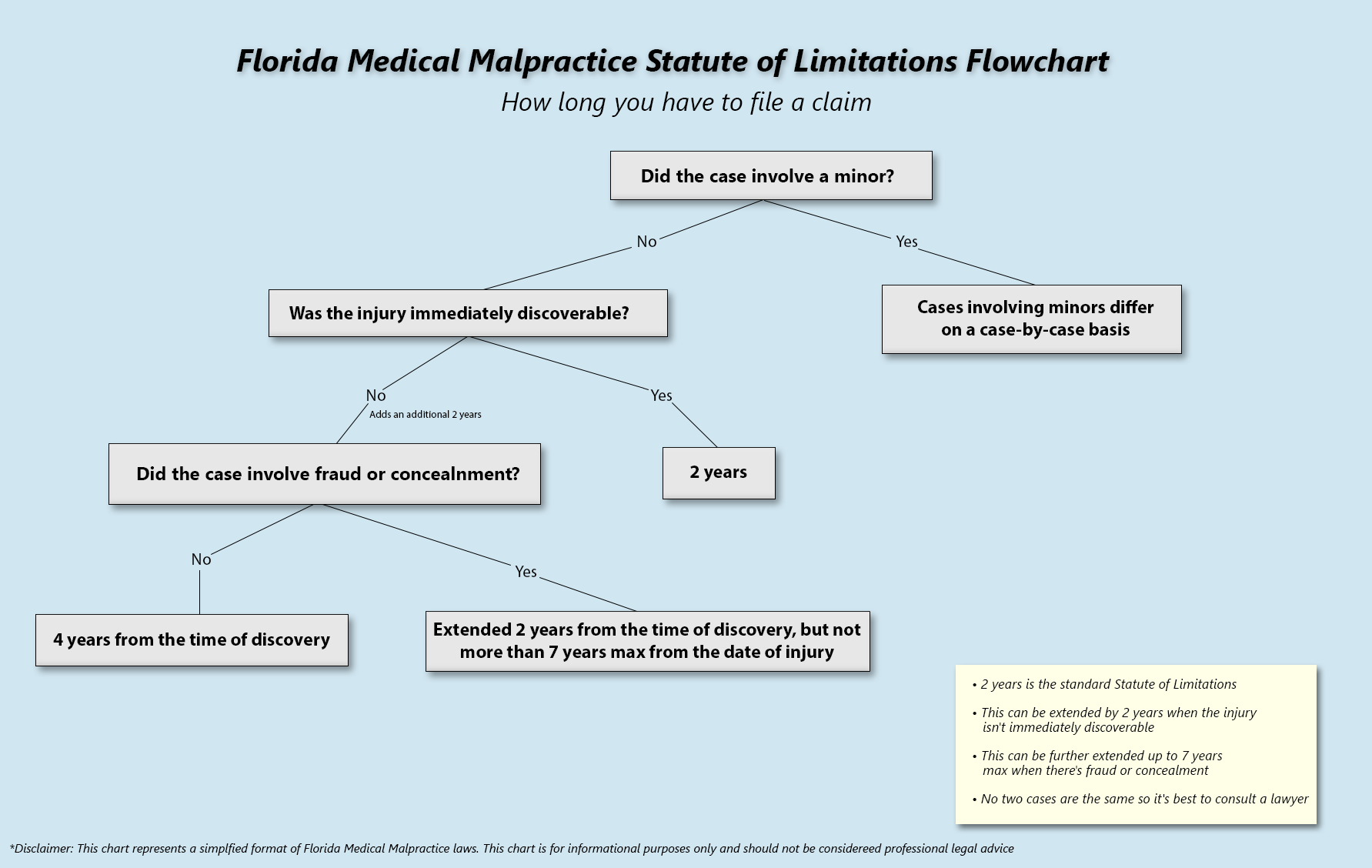
Because of this limited time window, it is absolutely critical that you hire an experienced medical malpractice attorney to investigate your case as soon as possible.
Why Hire Di Pietro Partners for a Medication Error Case?
Medical and Legal Insight
Di Pietro Partners works alongside a quadruple board-certified physician when evaluating medical malpractice matters. This combination of medical and legal insight can be particularly valuable in medication error cases involving prescriptions, dosages, drug interactions, allergies, and complex medical records.
Extensive Healthcare Experience
Managing Partner David Di Pietro has extensive experience with healthcare-related legal matters and previously served as Chairman of Broward Health, one of Florida’s largest public healthcare systems.
Experienced Trial Attorneys
Medication error cases may involve physicians, nurses, pharmacists, hospitals, and other healthcare providers. Our attorneys have substantial litigation and courtroom experience and are prepared to pursue a case through trial when necessary.
No Fee Unless We Recover Compensation
Di Pietro Partners handles medical malpractice cases on a contingency fee basis. Clients pay no attorney’s fees unless we recover compensation on their behalf.
Speak With a Florida Medical Malpractice Attorney About a Medication Error
Medication error cases can involve complex questions about prescribing decisions, dosage calculations, drug interactions, allergies, pharmacy records, and how medications were administered. Determining whether malpractice occurred may require a careful review of the medical records and the actions of each healthcare provider involved.
Di Pietro Partners represents medication error victims throughout Florida, as well as out-of-state clients whose medical injury occurred within the State of Florida. Our team works alongside a quadruple board-certified physician when evaluating medical malpractice matters, helping us assess both the medical and legal issues involved in medication error claims.
If you or a loved one suffered serious harm because of a medication or prescription error, contact the medical malpractice attorneys at Di Pietro Partners for a free and confidential case evaluation. There are no attorney’s fees unless we recover compensation on your behalf.